Solo Female Travel Namibia 2026: Self-Drive Safety Guide
2026 self-drive guide to Namibia for solo women: visa change, malaria alert, 4x4 must-haves, Etosha fee increase, and safety tips for Sossusvlei, Fish River Canyon, and Damaraland.

This post may contain affiliate links. Disclosure
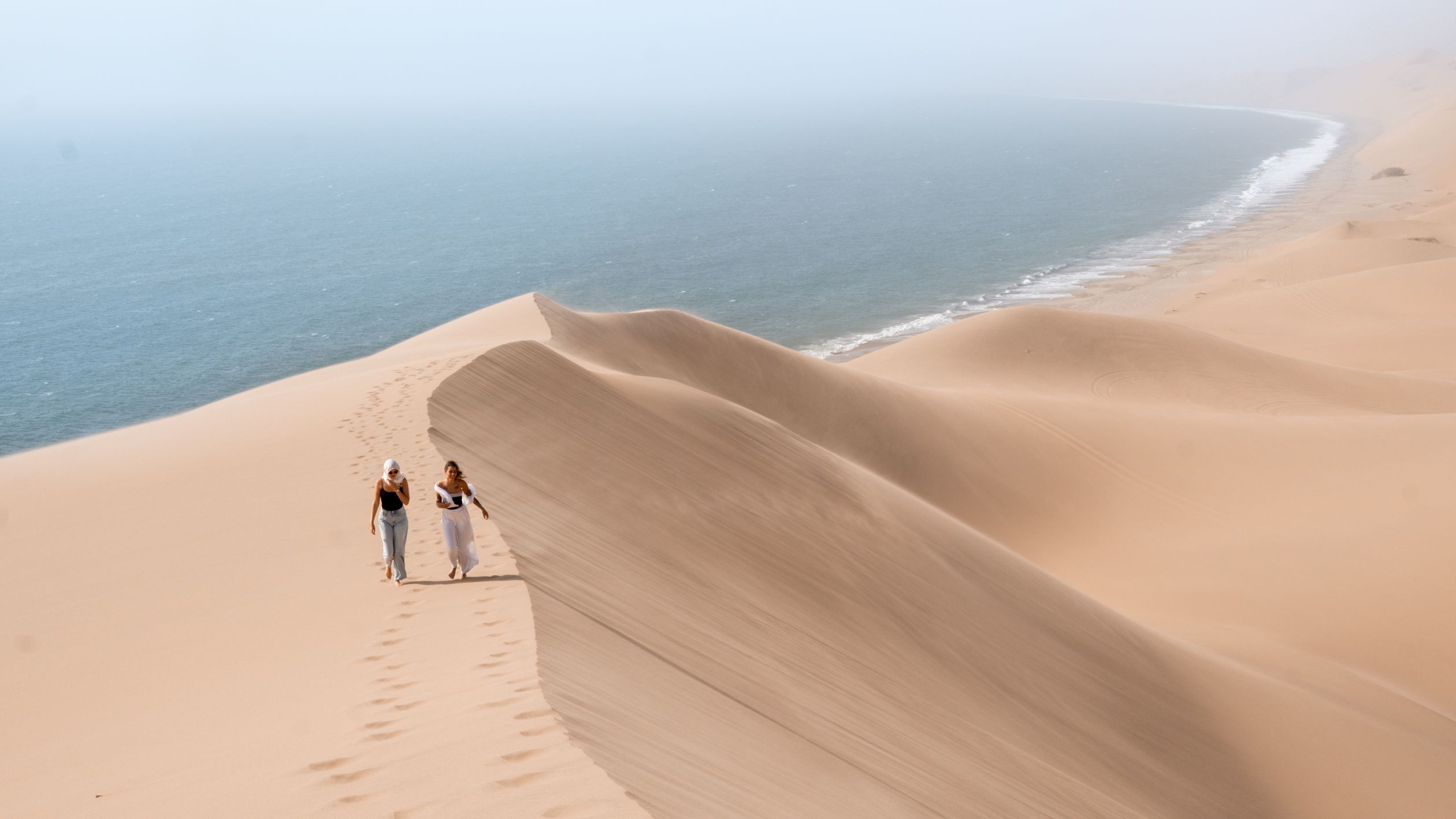
Namibia feels like the continent’s open-air living room—wide horizons, well-marked roads, and a reputation for welcoming solo adventurers. As a solo woman, you’ll find that the country’s low-density population, clear signage, and reliable 4x4 rental market make it one of Africa’s easiest places to explore on your own. The dry season (May-October) offers comfortable temperatures, spectacular wildlife congregations at Etosha waterholes, and unforgettable sunrise climbs on Sossusvlei’s dunes. Below is the practical, no-fluff roadmap you need for a confident, safe, and unforgettable 2026 self-drive journey, from visas to malaria prep, from 4x4 must-haves to the latest Etosha entrance fees.
Is Namibia good for a solo female self-drive trip? Namibia is one of Africa’s easiest countries to drive alone: low population density, clear signage and a reliable 4x4 rental market. Travel in the dry season, May to October, for comfortable temperatures and Etosha waterhole wildlife. The guide covers a 2026 visa change, malaria prep, fuel and connectivity, and Etosha’s fee increase.
Why Namibia Is Perfect for Solo Female Self-Drive
Namibia consistently ranks among the safest African destinations for visitors, with violent crime against tourists rare and most incidents involving opportunistic theft rather than personal attacks. The country’s road network is a mix of well-paved highways and spectacular gravel tracks that reward careful, prepared drivers with dramatic scenery. With 70% of roads being gravel, you’ll get a genuine sense of adventure without the chaotic traffic of larger nations.
Safety: The U.S. State Department rates Namibia Level 2 — Exercise Increased Caution. The UK Foreign Office notes: “Muggers often target tourists in Windhoek. Attacks may be violent and can take place at any time of day and in busy city-centre locations.” (US advisory · UK FCDO, updated 2025-12-10).
The U.S. State Department’s Level 2 advisory (Exercise Increased Caution) highlights non-violent crimes of opportunity—purse snatching and vehicle break-ins—so keeping valuables out of sight and locking your car when you stop are simple habits that go a long way. Medical facilities outside Windhoek and other major towns are limited, but the risk of serious interpersonal violence is low. This balance of safety, infrastructure, and raw natural beauty makes Namibia an ideal canvas for a solo female traveler who wants independence without constant worry.
Solo women who have completed Namibia self-drives consistently report that the experience feels far less daunting than it sounds on paper. The vast distances between towns actually work in your favor: traffic is light, drivers give each other wide berth on gravel roads, and the country’s low population density means you will rarely feel crowded or overwhelmed. Campsite staff and lodge owners throughout the country are accustomed to hosting solo female guests and are often proactive about safety briefings and local recommendations.
Visa, Entry & Currency Basics
Visa requirements — As of April 1, 2025, U.S. citizens must obtain a visa for Namibia. Tourist visas cost N$1,600 (approximately US$88) and grant a 90-day stay. You can apply online through the Namibia e-visa portal or receive the visa on arrival at Windhoek Hosea Kutako International Airport and major border crossings. Detailed visa information is available on the official site: Visit Namibia - Visa Information.
Currency — The Namibian Dollar (NAD) is pegged 1:1 to the South African Rand. In 2026 the average exchange rate sits around N$16.22 per US dollar, fluctuating between N$15.82 and N$16.57. ATMs in Windhoek, Swakopmund, and other major towns dispense NAD, and credit cards are widely accepted in hotels and larger restaurants. Carry a small amount of cash for remote areas where card terminals are absent. It is worth noting that South African Rand is also accepted in most parts of Namibia, giving you a useful backup if your NAD runs low before the next ATM.
Entry health checks — The U.S. Embassy in Namibia confirms the visa process and can answer specific entry-related queries: U.S. Embassy - Travel to Namibia.
Border crossings — If you plan to cross into Botswana via the Ngoma or Mohembo bridges, or into South Africa via Vioolsdrift or Noordoewer, carry printed copies of your visa, rental agreement, and vehicle cross-border permit. Border queues are generally short, but having paperwork organized avoids delays, particularly if you arrive near closing time.
Health Prep: Vaccines, Malaria & Medical Care
Namibia’s health landscape is generally good in urban centres, but the country is currently experiencing a notable malaria surge. In January 2026, nearly 9,000 cases were reported — a 68% increase over the same month in 2025. The malaria risk peaks from November through June, especially in northern regions such as Kavango, Kunene, and Zambezi.
Vaccinations — The CDC recommends the following for travelers to Namibia:
- Hepatitis A and B
- Typhoid
- Yellow fever (required if arriving from an endemic country)
- Rabies (for extended outdoor activities)
- Routine boosters (MMR, tetanus, etc.)
Full details are on the CDC’s traveler health page: CDC - Namibia Vaccinations and Health Advice.
Malaria prophylaxis — For any travel to the malaria-prone north, a daily antimalarial (e.g., atovaquone-proguanil, doxycycline, or mefloquine) is advised. Pack enough tablets for the entire trip, as pharmacies in remote areas are scarce. Begin prophylaxis at least one week before entering high-risk zones and continue for four weeks after leaving, per CDC guidance.
Medical facilities — In Windhoek, private hospitals such as Mediclinic Windhoek provide comprehensive care. Outside major towns, clinics are basic. Carrying a well-stocked first-aid kit, any prescription medication, and a satellite communicator for emergencies is prudent. Travel insurance with medical evacuation coverage is strongly recommended; helicopter evacuations from remote areas of Damaraland or the Kaokoveld can cost tens of thousands of dollars without insurance.
Self-Drive Essentials: 4x4, Fuel, Maps & Connectivity
Vehicle Choice
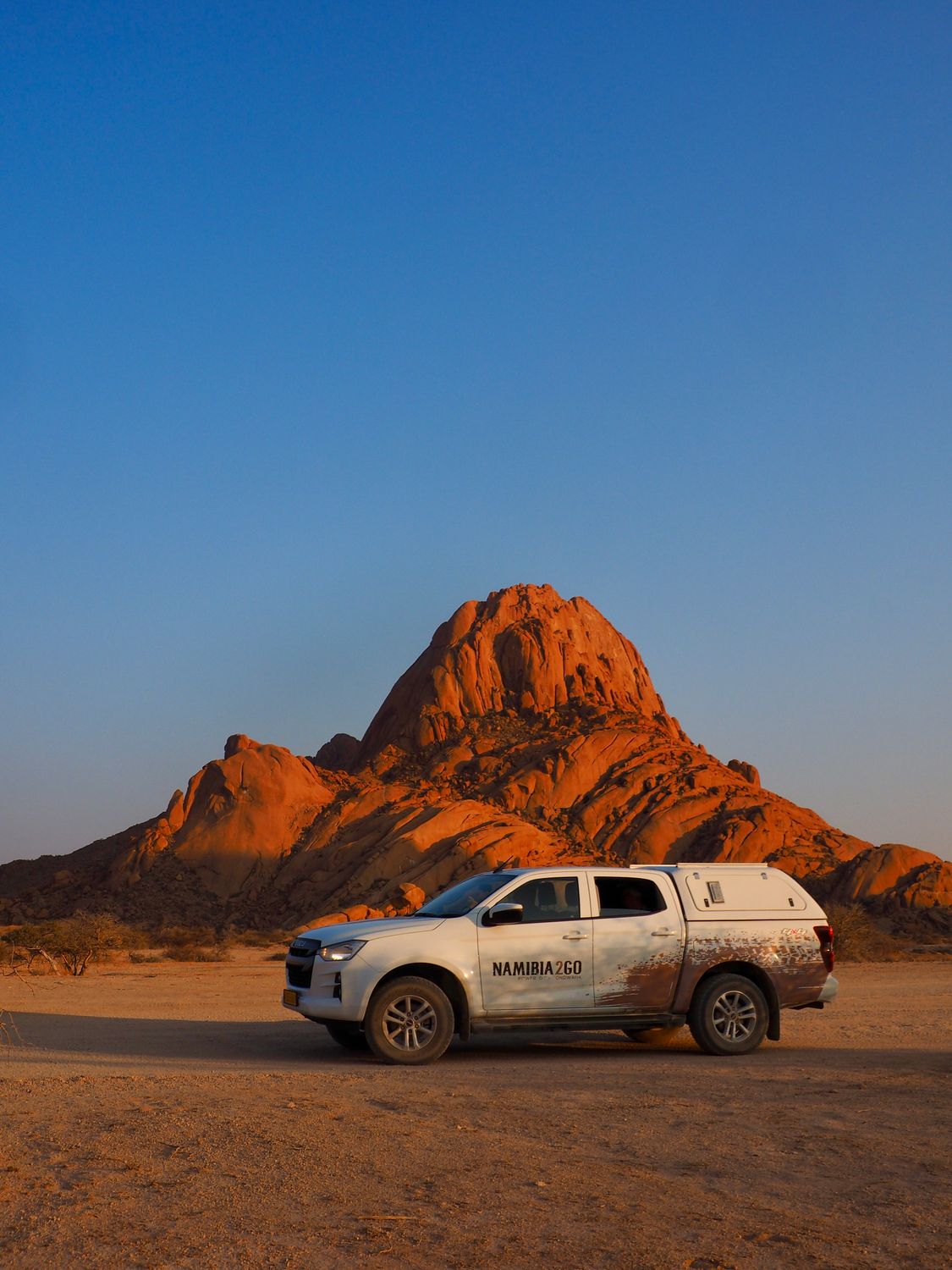
A 4x4 is essential for the iconic routes to Sossusvlei, Damaraland, and the Kaokoveld. While the main highways (B1, B2) are paved, the final legs to the desert dunes and remote wildlife reserves are gravel and can become slick after rare rains. Rental agencies in Windhoek typically offer models such as the Toyota Hilux, Land Cruiser, or Ford Ranger — pick one with high ground clearance and a reliable spare-tyre kit. Well-known operators include Britz Rentals and Avis Namibia, both of which provide comprehensive roof-tent camping rigs ideal for solo travelers.
Fuel and Supplies
Fuel stations become sparse after the town of Swakopmund. Fill up whenever you see a station, and keep at least 30% of the tank as a safety margin. Carry an extra fuel can (approximately 20 L) for long stretches, especially when heading to the remote Damaraland and Kaokoveld regions. Many rental companies include a second spare tyre — confirm this before you accept the vehicle, as a single puncture on a gravel road far from town is manageable, but two punctures without a backup spare is a genuine emergency.
Navigation
Offline maps are a lifesaver on gravel roads where mobile data drops to 2G/EDGE. Download the entire Namibia map on Google Maps or Maps.me before you leave, and bring a printed road atlas as a backup. Remember that Namibian law requires headlights on at all times, even during daylight — keep them on to avoid fines and improve visibility on dusty tracks.
Connectivity
MTC Namibia is the largest carrier, offering 4G/LTE in Windhoek, Swakopmund, and other major towns. On secondary gravel roads, expect 3G, and in the deep desert you may fall back to 2G or no signal at all. Pre-paid SIM cards cost US$1-5 and must be registered with your passport at the airport or a local shop. Airalo also offers eSIM plans for Namibia that activate instantly, saving you the registration queue at the airport. For true off-grid peace of mind, consider a satellite messenger (e.g., Garmin inReach) that works without cellular coverage.
Anchor Destinations & What to See
Below are the five must-visit spots that will shape your itinerary. Each offers a distinct slice of Namibia’s dramatic landscape.
Sossusvlei — Red Dunes and Dead Trees
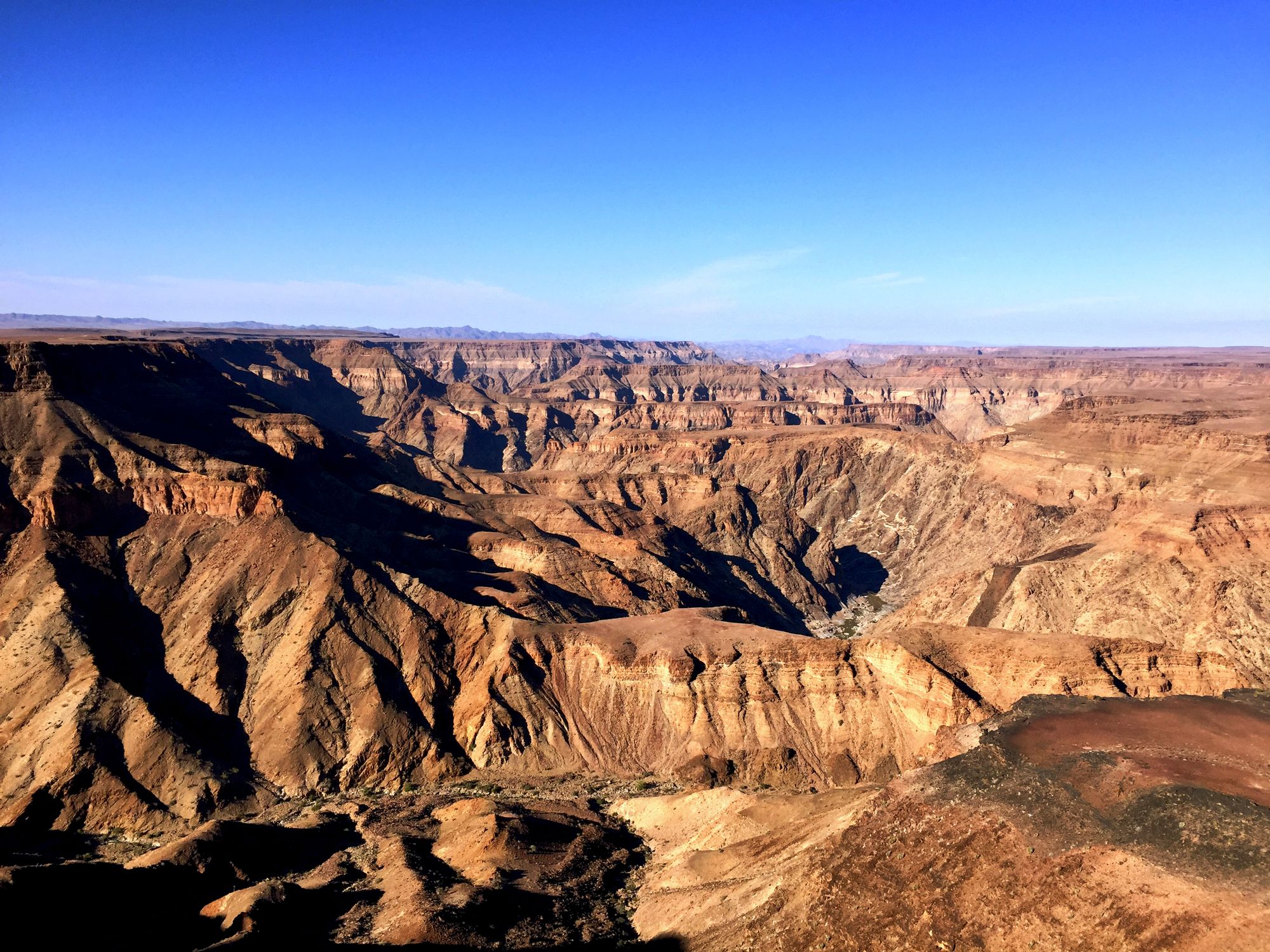
The iconic red dunes of Sossusvlei rise like ocean waves frozen in time. Early mornings (5 am-7 am) are the coolest for climbing Dune 73, and the soft light creates unforgettable photos. The nearby Deadvlei, with its ancient, skeletal trees set against vivid orange sand and a cobalt sky, is one of the most photographed scenes on the continent. The Namib-Naukluft National Park gate opens at sunrise; arriving just before dawn means you beat the tour buses and have the dunes largely to yourself.
Etosha National Park — Wildlife Concentration
Etosha’s massive salt pan draws wildlife to its waterholes, especially during the dry season. The park’s entrance fees increased on April 1, 2026: N$280 per adult per day, plus a vehicle fee of about N$60 for private cars. Plan to spend at least three days to maximize sightings of elephants, lions, giraffes, and the park’s famed black rhinoceros.
Gate times and entry fees are outlined on the official site: Etosha National Park - Gate Times and Entry Fees.
Fish River Canyon — Rugged Depths
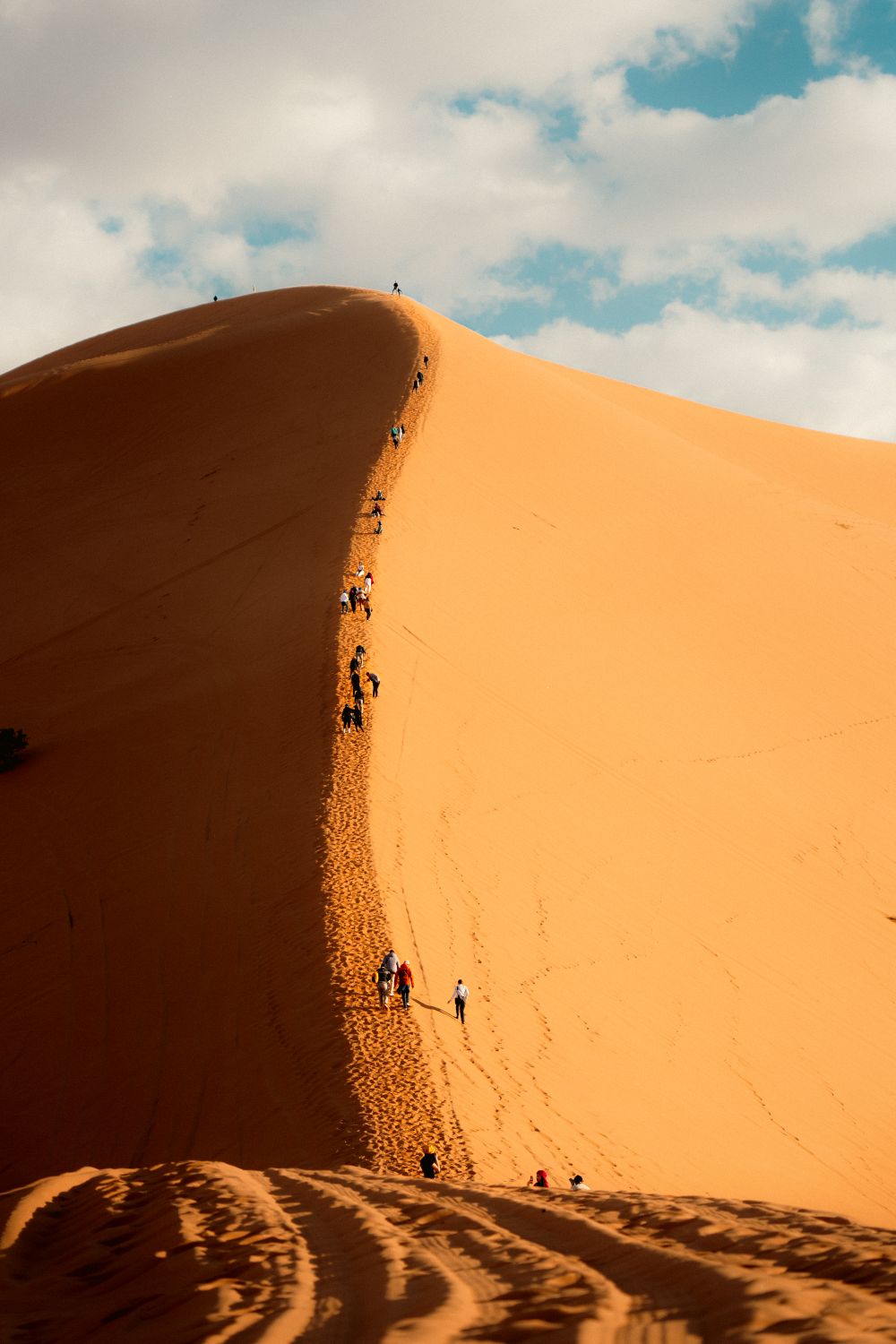
The world’s second-largest canyon offers breathtaking vistas and challenging hikes. The rim walk provides panoramic views of the canyon’s sheer cliffs, while the bottom trail (for the adventurous) descends into the gorge. Carry plenty of water — temperatures can soar above 38 degrees Celsius in the green season, making hydration critical. The main viewpoints are accessible by 2WD vehicle, so Fish River Canyon is a good stop if you are mid-route and in a standard sedan.
Swakopmund — Coastal Charm
Swakopmund blends German colonial architecture with Atlantic surf culture. The golden dunes here are perfect for quad biking, sandboarding, and sunset strolls. The town’s cafes serve fresh seafood and local craft beer, and the nearby lagoon offers kayaking opportunities for a gentle water break after dusty road days.
Damaraland and Kaokoveld — Ancient Landscapes
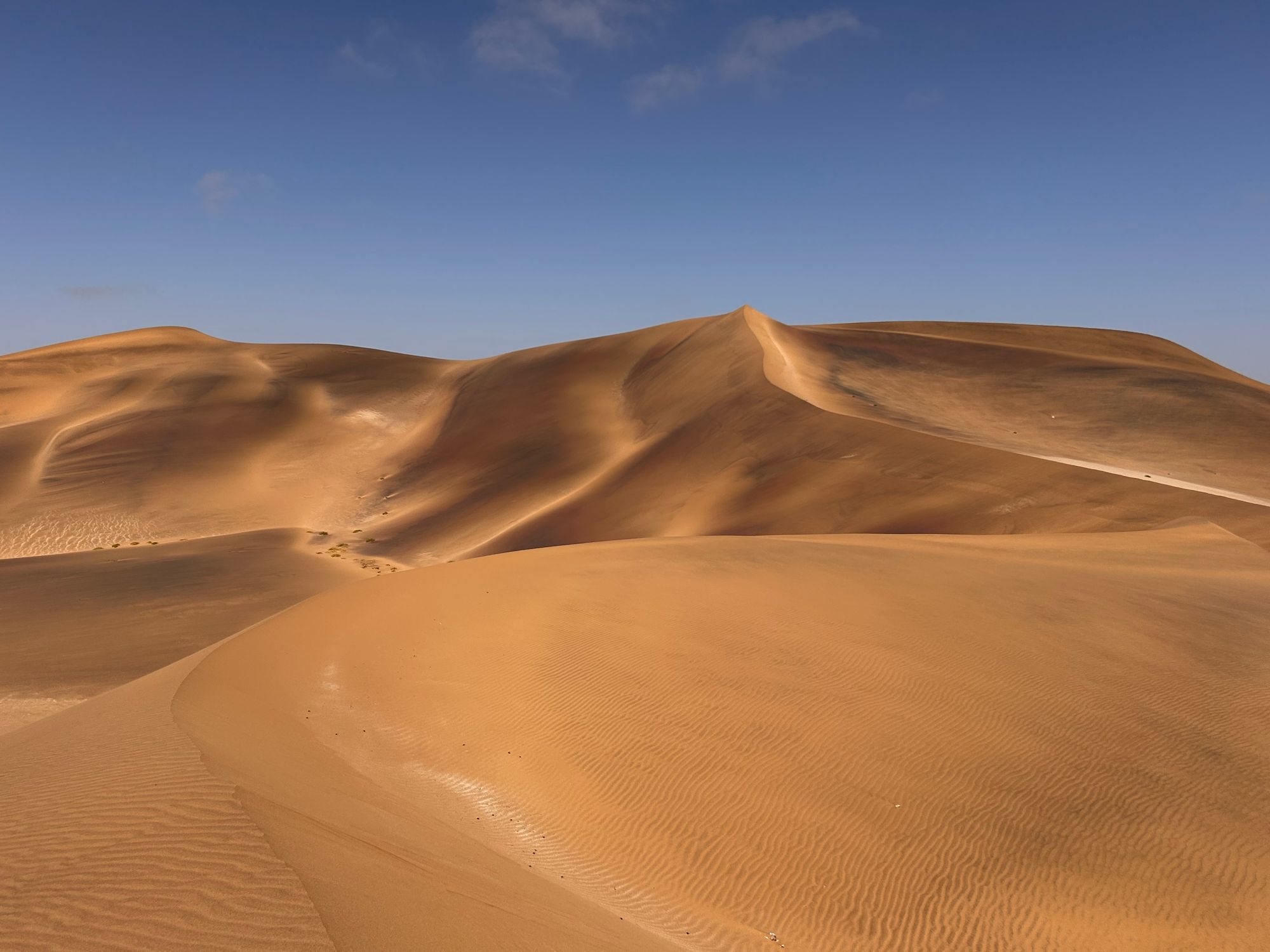
Damaraland’s rugged cliffs, ancient rock engravings at Twyfelfontein (a UNESCO World Heritage Site), and desert-adapted wildlife including the desert elephant create a raw, unforgettable experience. The remote Kaokoveld region, home to the Himba people, offers cultural immersion and the chance to see the striking Spitzkoppe mountain at sunset — a perfect backdrop for reflective moments.
Etosha National Park Fees and Planning
Etosha’s fee increase reflects ongoing conservation work. For a solo traveler in a private 4x4, the daily cost will be:
- Adult entry: N$280 (approximately US$17.30) per day
- Vehicle fee: N$60 (approximately US$3.70) per day
If you plan a three-day stay, budget roughly N$1,020 (approximately US$63) for park access. The park opens at 6 am and closes at 6 pm; night drives are not permitted by self-drivers, but you can camp at designated sites (e.g., Okaukuejo, Halali) for an authentic nocturnal wildlife experience — the floodlit waterhole at Okaukuejo is particularly spectacular after dark. Remember to carry extra cash for campsite fees.
For a complete breakdown of fees and gate opening times, see the official page: Namibia Wildlife Resorts - Park Entrance and Conservation Fees.
Advance bookings for NWR campsites and chalets are strongly recommended during the peak dry season (June-September), as the most popular sites at Okaukuejo and Namutoni fill months in advance. The NWR online booking portal accepts international credit cards.
Practical Safety and Comfort Tips
- Secure your vehicle — Always lock doors, store valuables out of sight, and park in well-lit areas or designated campsites.
- Stay visible — Keep headlights on (legal requirement) and wear bright clothing when walking near roads.
- Hydration and Sun Protection — Carry at least 2 L of water per day, use SPF 30+ sunscreen, and wear a wide-brim hat. The desert sun is relentless even on overcast days.
- Travel Insurance — Choose a policy that covers medical evacuation, especially if you’ll be far from hospitals. Check that your 4x4 rental’s included excess cover is sufficient, or top up with a credit-card rental insurance product.
- Emergency contacts — Save the U.S. Embassy number (Windhoek: +264 61 342 5000) and local emergency services (112).
- Solo night safety — Avoid isolated areas after dark. If you need to move after sunset, stick to main roads and keep your phone charged.
- Women-focused resources — For tech-savvy safety, check out the latest solo-female travel safety apps: Best Solo Female Travel Safety Apps Tech 2026.
Budget Snapshot and Packing List
Approximate Costs (per person, 10-day trip)
| Item | Approx. Cost (USD) |
|---|---|
| Visa | 88 |
| Car rental (4x4, 10 days) | 600-800 |
| Fuel (approximately 200 L) | 150 |
| Accommodation (mix of lodges and camps) | 500-700 |
| Etosha fees (3 days) | 63 |
| Meals and drinks | 300 |
| SIM and data | 15 |
| Misc. (permits, souvenirs) | 100 |
| Total | approximately 1,800-2,200 |
Packing Essentials
- Vehicle gear: spare tyre, jack, extra fuel can, tire repair kit, high-visibility vest, basic tool kit.
- Navigation: offline maps, printed road atlas, GPS unit (if not provided by rental).
- Health: antimalarial tablets, personal prescription meds, first-aid kit, insect repellent (DEET 30% or higher).
- Clothing: breathable layers, long-sleeve shirts for sun protection, warm jacket for cool desert evenings, sturdy hiking boots, comfortable sandals for town walks.
- Tech: prepaid SIM (MTC) or Airalo eSIM, power bank, universal adapter (Type D/M used in Namibia), satellite communicator for remote areas.
- Safety: lockable daypack, RFID-blocking wallet, portable door alarm for lodge rooms.
By preparing these items, you’ll minimize surprises and keep the focus on the awe-inspiring landscapes rather than logistical headaches.
Related Reading
Get price-drop alerts and new guides from HerTripGuide
One email a week: price drops on the gear we recommend, new guides, and what changed. No spam, unsubscribe anytime.